You Won’t Believe What I Found Shopping in Lalibela’s Hidden Urban Corners
Lalibela, Ethiopia, is more than ancient rock-hewn churches—it’s a living urban tapestry. Wandering its narrow lanes, I discovered a world where tradition meets daily commerce in the most unexpected ways. Local markets aren’t just for tourists; they’re where locals barter, artisans craft, and culture breathes. If you think shopping here is just souvenirs, think again. This is raw, authentic exchange in one of Africa’s most spiritual cities. Let me take you through the real shopping experience in Lalibela’s beating urban heart.
The Urban Soul of Lalibela: Beyond the Churches
Lalibela is often portrayed as a sacred sanctuary, a place suspended in time where faith echoes through stone corridors carved from living rock. While its eleven medieval monolithic churches draw pilgrims and travelers from across the globe, the town itself is far from static. It pulses with life, shaped by centuries of devotion but equally defined by the rhythms of daily existence. Homes cluster around sacred sites, children play near ancient staircases, and donkeys carry goods along the same paths once trod by priests and penitents. This coexistence of the holy and the everyday creates a unique urban fabric—one where spirituality and survival are interwoven.
The town’s layout reflects this duality. Though compact, Lalibela functions as a fully operational highland community. Its streets are not museum pathways but working arteries lined with small shops, open-air stalls, and family-run eateries. Residents live in modest stone and wood houses, many with corrugated metal roofs, tucked between hillsides and ceremonial courtyards. Electricity and mobile signals have arrived, yet life remains deeply rooted in tradition. There is no separation between sacred space and city life—worship happens in the morning, shopping follows at midday, and evening prayers blend with the scent of cooking injera. This seamless integration gives Lalibela its authenticity, a quality increasingly rare in destinations shaped by tourism alone.
What stands out most is how commerce thrives without overshadowing reverence. Vendors set up near church entrances, but never intrude upon prayer. Their presence is not disruptive but complementary, a reflection of how economic life has always supported religious centers in Ethiopian towns. The local economy is not built to serve tourists exclusively; it exists first for the people of Lalibela. This balance makes the town feel genuine, not staged. Visitors who come expecting a silent pilgrimage site may be surprised by the chatter of bargaining, the clatter of pots, and the laughter of market women. Yet these sounds are not distractions—they are the heartbeat of a living town, one where faith and function coexist in harmony.
Morning Markets: Where the City Wakes Up
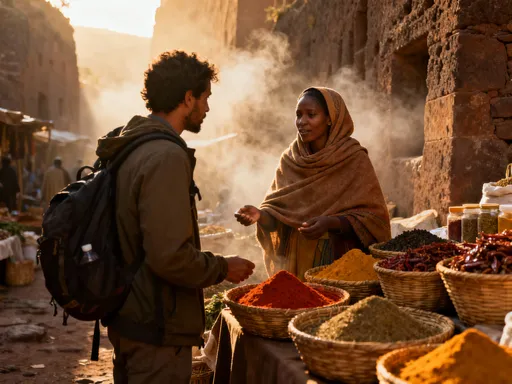
Long before the first pilgrim enters the Church of St. George, Lalibela’s markets are already alive. At dawn, wooden carts roll into the open squares near the main access roads, laden with fresh produce from nearby farms. Women in white cotton dresses and headscarves arrange pyramids of oranges, avocados, and yellow-skinned Ethiopian bananas. Bunches of enset—also known as the false banana, a staple in the region—rest beside baskets of teff, the grain used to make injera. The air carries the earthy scent of damp soil, mingled with the sharp tang of raw ginger and dried berbere spice.
These morning markets are not curated for photo opportunities; they are essential to daily life. Local families rely on them for food, and the rhythm of supply follows the agricultural calendar. During the rainy season, leafy greens like gomen and collard greens appear in abundance. In drier months, root vegetables and dried legumes dominate. Prices shift with availability, and bartering is common, though not aggressive. A kilo of tomatoes might cost 30 birr in harvest season, rising to 50 when supply dwindles. The market is also a social hub—neighbors exchange news while weighing coffee beans, and elders sit on low stools sipping sweet tea from small glass cups.
One of the most striking aspects is the absence of plastic packaging. Goods are wrapped in banana leaves, bundled with twine, or carried in woven sacks. Even currency exchanges happen with care—vendors count out birr notes slowly, often placing coins in the palm rather than tossing them. This deliberate pace stands in contrast to the hurried transactions of modern supermarkets. Here, commerce is personal, rooted in trust and familiarity. For visitors, shopping at these markets offers more than fresh ingredients—it provides a window into Ethiopian domestic life, where food is not just sustenance but a shared cultural practice.
Some travelers hesitate to participate, fearing they might disrupt local routines. But most vendors welcome respectful engagement. A simple greeting in Amharic—“Salam” or “Tena yistilin” (How are you?)—opens the door to conversation. Many appreciate when visitors ask about unfamiliar items, showing genuine interest rather than treating the market as a backdrop. Buying a handful of roasted barley or a small bundle of koseret herb becomes an act of connection, not consumption. These moments, fleeting as they may be, contribute to a deeper understanding of Lalibela as a community, not just a destination.
Artisan Stalls Along the Pilgrim Paths
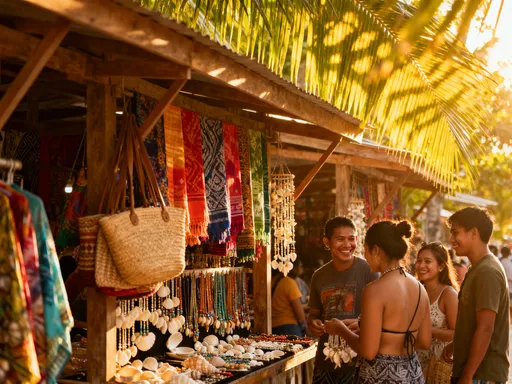
As sunlight filters into the carved courtyards of Lalibela’s churches, a different kind of commerce begins along the winding footpaths that connect sacred sites. Small wooden stalls appear beneath eaves and beside stone walls, manned by artisans who have spent years mastering their crafts. These are not mass-produced souvenirs from distant factories but handcrafted items made with intention and skill. Woven baskets with intricate geometric patterns hang from hooks, each one unique in design and dye. Carved wooden crosses, some small enough to wear around the neck, others large enough to stand in a home chapel, rest on cloth-lined trays.
The craftsmanship on display reflects generations of tradition. Basket weaving, for example, uses natural fibers like grass and reed, dyed with plant-based pigments. The patterns often carry symbolic meaning—zigzags representing water, diamonds standing for unity. Similarly, the crosses are more than religious symbols; they are objects of devotion, often blessed in church before being sold. Many artisans are themselves regular churchgoers, and their work is seen as an extension of faith. One elderly craftsman explained that he carves a new cross each week, offering the first to his priest as a form of offering. This spiritual dimension gives the items depth, transforming them from mere objects into vessels of meaning.
Among the most sought-after pieces are hand-stitched garments made from cotton or handspun wool. Traditional shawls, known as netela, are woven in white with colorful border stripes, worn during religious festivals and family celebrations. Some women sell smaller versions tailored for visitors—lightweight scarves that serve as both fashion and modesty coverings when entering sacred spaces. These textiles are not only beautiful but functional, designed for Ethiopia’s highland climate. Purchasing one supports not just the vendor but the preservation of textile arts that might otherwise fade in the face of industrial production.
What makes these stalls particularly special is their integration into the pilgrimage experience. Pilgrims often buy a small cross or prayer cloth as part of their devotional practice, not as a keepsake but as a sacred object. Tourists who shop here are not disrupting this tradition but participating in a broader cultural economy. The key is to approach with respect—asking permission before photographing, handling items gently, and recognizing that some pieces may hold religious significance beyond their aesthetic value. When done mindfully, shopping here becomes a form of cultural exchange, a quiet dialogue between visitor and maker.
Navigating Bargains: A Shopper’s Reality Check
Haggling is a common practice in Lalibela’s markets, but it comes with unspoken rules. Unlike in some tourist-heavy cities where prices are inflated for foreigners, many vendors in Lalibela quote fair starting points. A hand-carved cross might be offered at 150 birr, a price that reflects the hours of labor involved. Pushing for a 50% discount may seem like a win, but it can undermine the artisan’s livelihood. The goal should not be to “win” a deal but to reach a mutually respectful agreement.
One effective approach is to ask, “What is a fair price for this?” rather than launching into negotiation. This simple question often leads to honest dialogue. In one instance, a vendor selling woven baskets explained that the larger ones take two full days to complete and use rare natural dyes. After hearing this, offering 200 birr instead of the requested 250 felt appropriate—still a modest reduction, but one that honored the work involved. Smiles followed, and the exchange ended with a shared cup of tea. These moments of connection are often more valuable than the item purchased.
Another reality check involves recognizing the difference between market goods and sacred objects. While a wooden cross can be bought, some items—such as prayer scrolls or blessed cloths—are not meant for casual sale. Vendors may hesitate to sell them to those who don’t understand their significance. Observing how locals interact with such items can guide respectful behavior. If others are handling something with reverence, it’s best to do the same or refrain from purchasing altogether.
Tourist traps do exist, particularly near the main entrance to the church complex, where some vendors rely on volume over authenticity. Mass-produced trinkets from outside Ethiopia occasionally appear, disguised as local crafts. To avoid these, look for signs of handmade quality—irregular stitching, natural variations in wood grain, or subtle imperfections that indicate human touch. Buying directly from the artisan, rather than a middleman, also increases authenticity. When in doubt, ask how the item was made or where the materials come from. Genuine makers are usually happy to share their process, turning a simple transaction into a meaningful encounter.
Hidden Courtyards and Home-Based Craft Shops
Beyond the main thoroughfares, Lalibela reveals another layer of commerce—one that unfolds in private courtyards and family compounds tucked into the hills. These are not marked on maps, nor advertised with signs. They are discovered by conversation, by following a friendly vendor’s gesture, or by wandering down a narrow alley where the sound of hammering leads to a workshop. In these intimate spaces, entire families participate in craft production, preserving techniques passed down through generations.
One such courtyard, reached by a steep stone path, is home to a family specializing in hand-carved religious icons. The father, a craftsman in his sixties, works with a small chisel and mallet, shaping soft limestone into depictions of saints and biblical scenes. His daughters paint the finished pieces with natural pigments—ochre from the earth, indigo from plants, white from crushed bone. The icons are not made for export but for local churches and homes. When a visitor expresses interest, the family may allow a piece to be purchased, but only after explaining its spiritual context. This is not a shop in the conventional sense; it is a living workshop where art, faith, and family life intersect.
Another hidden spot belongs to a woman who produces natural dyes using plants gathered from the surrounding highlands. She demonstrates how leaves are boiled to create yellow, roots ground for red, and lichens fermented for deep purple. These dyes are used in textile production, giving traditional garments their distinctive hues. Visitors who arrive are often invited to sit, observe, and even try their hand at dyeing a small cloth. There is no fixed price list—payment is suggested based on what one can afford. This model of micro-commerce thrives because of trust and personal connection, not marketing or profit margins.
These home-based enterprises are made possible by Lalibela’s dense urban structure. Space is limited, so production happens where people live. A spare room becomes a weaving studio, a backyard serves as a drying area for dyed fabrics. This proximity allows families to balance work and domestic life, especially important in a town where religious observance often requires time away from daily tasks. For travelers, visiting these spaces feels like a privilege—an invitation into private worlds rarely seen by outsiders. It also supports a form of tourism that values authenticity over convenience, relationship over transaction.
The Role of Women in Lalibela’s Urban Commerce
Women are the backbone of Lalibela’s informal economy, particularly in food and textile markets. At the morning produce stalls, it is mostly women who manage sales, negotiate with suppliers, and oversee household budgets. In the textile sector, female artisans dominate weaving and embroidery, often working in cooperatives that pool resources and share training. These groups provide not only income but also social support, enabling women to maintain economic independence in a traditionally patriarchal society.
One cooperative, formed over a decade ago, brings together over thirty women from surrounding villages. They specialize in hand-embroidered tablecloths and ceremonial garments, using patterns that reflect their ethnic heritage. The group operates collectively—profits are shared, decisions are made by consensus, and younger members are mentored by elders. Their work has gained recognition beyond Lalibela, with orders coming from Addis Ababa and even international buyers. Yet they remain rooted in the community, reinvesting earnings into local education and health initiatives.
What makes these women’s contributions especially significant is how they sustain culture through commerce. The designs they stitch—crosses, stars, stylized animals—are not decorative choices but cultural symbols with spiritual resonance. By selling these items, they ensure that traditional knowledge is not lost. Moreover, their presence in public markets challenges assumptions about gender roles in religious towns. Far from being excluded, they are active participants in shaping Lalibela’s economic and cultural identity.
For visitors, supporting these women means more than buying a product—it means contributing to community resilience. A purchase from a female vendor often has a ripple effect, helping to educate children, improve housing, or fund small business expansions. Travelers who take the time to learn the stories behind the goods—asking names, listening to experiences—help affirm the dignity of this work. In a world where mass production often erases individuality, these women preserve both craft and personhood through their daily labor.
Shopping with Respect: Ethical Choices in a Sacred Space
Shopping in Lalibela is not a neutral act. Every purchase exists within a complex web of faith, tradition, and survival. To engage mindfully is to recognize that this town is not a museum exhibit but a living community with real needs and values. The goal should not be to collect souvenirs but to participate respectfully in a culture that welcomes guests without compromising its soul.
One way to shop ethically is to prioritize direct purchases from artisans. This ensures that income goes to the maker, not a middleman or tourist-focused enterprise. It also allows for conversation—learning about materials, techniques, and meanings. When a wooden cross is explained not just as a craft but as a devotional object, its value deepens. Similarly, buying food from local vendors supports household economies and reduces reliance on imported goods. Even a small purchase—a cup of honey wine, a handful of roasted chickpeas—becomes a gesture of solidarity.
Equally important is knowing when not to buy. Sacred objects used in liturgical practice, such as prayer staffs or incense holders, may not be appropriate for tourists to own. Taking photographs of people at work is acceptable only with permission, and never during prayer times. Dressing modestly—covering shoulders and knees—is not just a rule for church visits but a sign of respect in all public spaces. These small acts of consideration help maintain the balance between tourism and reverence.
In the end, shopping in Lalibela can be redefined not as consumption but as connection. It is a way to honor the resilience of a community that has preserved its identity through centuries of change. Each basket, each cloth, each hand-carved cross carries a story—one of skill, faith, and daily perseverance. To carry one home is not to possess a relic but to remember a moment of human exchange. And in that memory, the true spirit of Lalibela lives on.